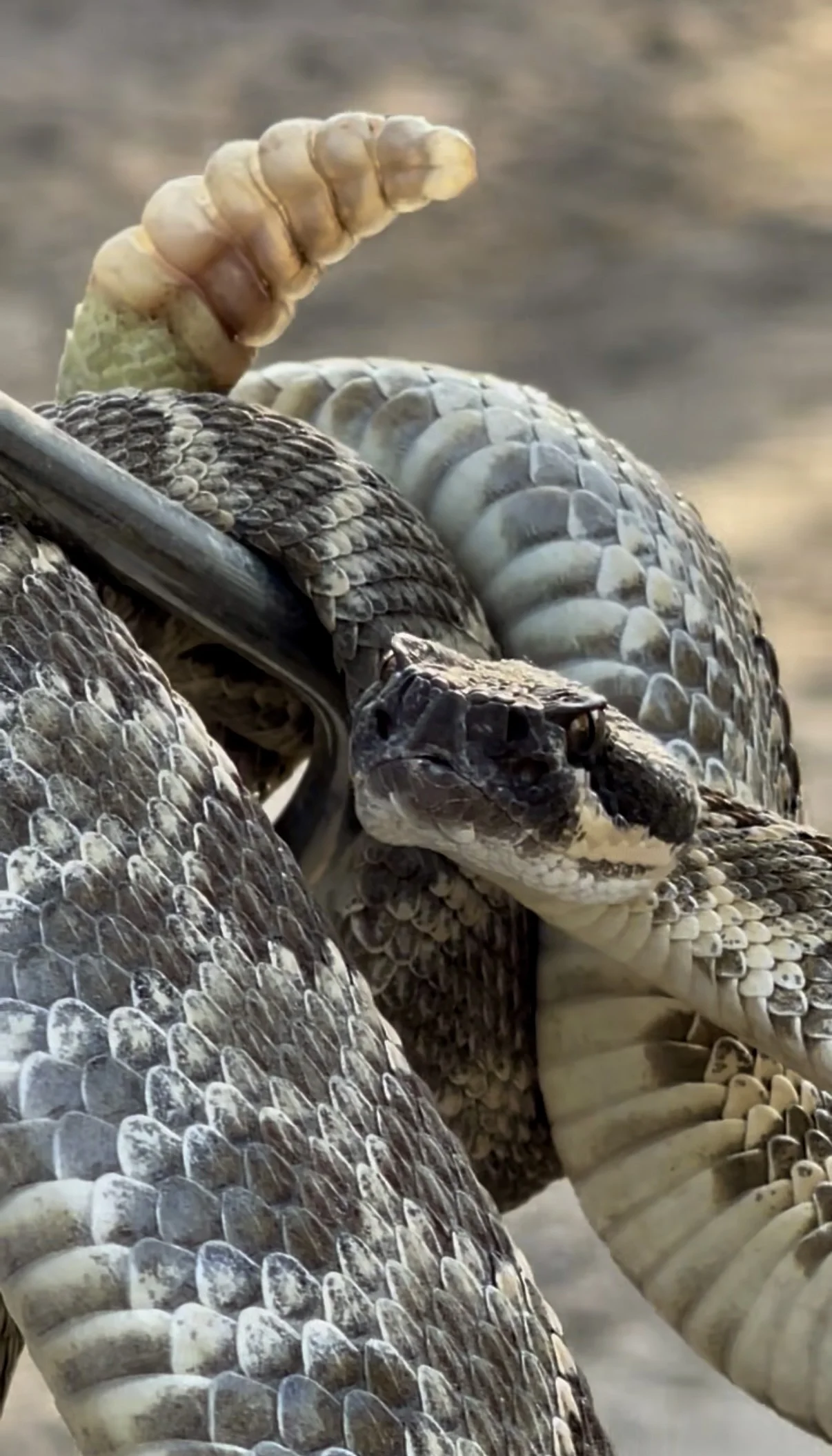
A suspected rattlesnake bite is a true emergency. Every minute matters — here are the exact steps, then what to watch for, what it costs, and how to make sure it never happens again.
This page is general information, not a substitute for professional veterinary care. If your dog may have been bitten by a rattlesnake, contact an emergency veterinarian immediately.
Most bites land on the face, head, or front legs — wherever a curious dog investigates. Signs can appear within minutes. Watch for:
At the hospital, your vet will stabilize your dog and administer antivenom — the only proven treatment for envenomation — along with IV fluids, pain control, and monitoring. Speed is the single biggest factor in the outcome.
That bill is driven largely by antivenom, which is expensive and often requires multiple vials plus overnight hospitalization. Prompt treatment drops the mortality risk to roughly 1–7% — but small dogs can deteriorate within an hour, so never "wait and see."
If your dog is vaccinated, that's good to know — but it does not change the steps above. The canine rattlesnake vaccine carries only a conditional USDA license, meaning its efficacy has never been fully demonstrated.
A retrospective analysis of 272 envenomation cases found no significant difference in mortality, length of hospital stay, or amount of antivenom required between vaccinated and unvaccinated dogs. The biggest danger of the vaccine is behavioral: owners who believe their dog is protected may delay emergency care — the single most preventable cause of death after a bite.
Bottom line: a vaccinated dog still needs immediate veterinary treatment after a bite. The vaccine is not a substitute for emergency care — or for prevention.
You can't watch every step of every hike or backyard romp — but you can teach your dog to avoid rattlesnakes on their own. Rattlesnake avoidance training conditions your dog to recognize a snake by scent, sound, and sight and to turn and flee before a strike is ever possible.
At The Snake School, we run the complete 12-station live-snake course — with every rattlesnake inside a secure ¼-inch wire containment unit. No muzzles. Zero bites in class, ever. About 9 out of 10 dogs lock in a clear avoidance response after a single session.
A session costs a fraction of one emergency vet visit — and could save your dog's life.
Get to a veterinary emergency room immediately — antivenom works best within about 4 hours. Carry your dog instead of letting them walk (exertion spreads venom faster), keep the bite below heart level, remove any collar or harness near the bite before swelling starts, keep your dog calm and warm, and call ahead so the vet can confirm they have antivenom in stock.
Act immediately. Antivenom is most effective within roughly the first 4 hours, and small dogs can deteriorate within an hour. Don't wait to see if symptoms develop — drive to an emergency vet right away.
Common signs include one or two puncture wounds, rapid and painful swelling, bleeding or bruising, drooling, panting, weakness or collapse, vomiting, and restlessness. Important: a bite with neurotoxic venom can cause far less swelling while being more dangerous — less swelling does not mean less danger. When in doubt, treat every suspected bite as an emergency.
The average vet bill for a rattlesnake bite runs about $2,500 to $5,000 or more, driven largely by antivenom, which is expensive and often requires multiple vials plus hospitalization and monitoring.
Don't rely on it. The canine rattlesnake vaccine carries only a conditional USDA license, and a retrospective analysis of 272 envenomation cases found no significant difference in mortality, hospital stay, or antivenom required between vaccinated and unvaccinated dogs. It is not a substitute for emergency care — a vaccinated dog still needs immediate veterinary treatment after a bite.
Yes — most dogs survive with prompt treatment. Survival is roughly 80–90% with immediate antivenom, and prompt care reduces mortality to about 1–7%, versus 20–30% when a bite is untreated or care is delayed. Speed is everything.
The most effective prevention is rattlesnake avoidance training, which conditions your dog to recognize and flee from a rattlesnake by scent, sound, and sight. The Snake School runs a full 12-station course with every snake in secure containment — never muzzled — with a roughly 9-in-10 success rate.
Give your dog the instinct to walk away from a rattlesnake. One session. One morning. Protection that lasts the season.
Questions? Call or text 661-658-1774