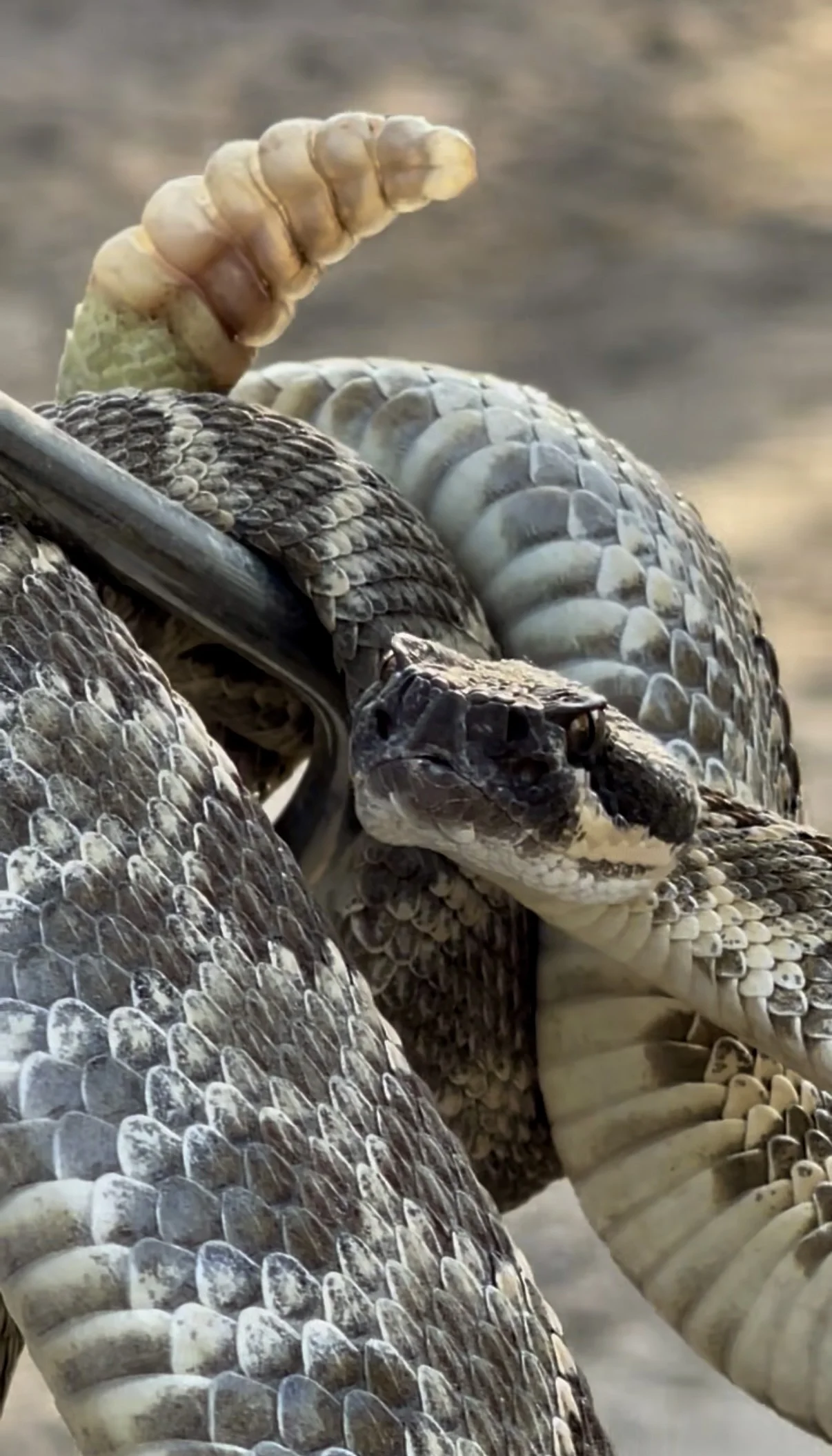
Caught at a Homeowner's Property in Santa Clarita
Southern Pacific Rattlesnake
Caught at a Homeowner's Property in Santa Clarita
Southern Pacific Rattlesnake
No census of rattlesnakes exists for the valley — snakes are notoriously hard to count. This estimate applies measured field densities for Crotalus oreganus (radio-telemetry studies report on the order of ~0.2 snakes per acre) to roughly 300,000 acres of undeveloped SCV habitat, producing a wide modeled range of about 30,000–90,000.
What we don't claim: we make no assertion about whether the population is rising or falling over time — no dataset supports a year-over-year trend. An earlier version of this page applied a higher density and showed a growth curve; we've since corrected that. The honest takeaway is abundance: a large, dense population across the valley's open space.
Sources: Crotalus oreganus field telemetry density data · CDFW · L.A. County Dept. of Regional Planning (habitat acreage)
Santa Clarita is home to one genuinely dangerous snake and several harmless species frequently mistaken for it. Learn what's out there — and how to tell the difference.


The Southern Pacific Rattlesnake is the most dangerous snake in Santa Clarita and one of the most dangerous in North America.
Key identifiers include a triangular head, heat-sensing pit organs between the eye and nostril, vertical elliptical pupils, and keeled scales that give the body a rough, matte texture.
Not every snake you encounter is dangerous — but misidentification causes panic and unnecessary risk.


In Association With
Cary Quashen Rattlesnake Wrangling
As a community service to Santa Clarita homeowners, we have safely removed and relocated over 1,300 rattlesnakes from people's homes across the Santa Clarita Valley — and 350 this year alone.
Every snake is handled safely and relocated — never killed. This is the same expertise and respect for rattlesnakes that we bring to every training day.
Cary Quashen Rattlesnake Wrangling →Safe rattlesnake avoidance training requires more than a skilled dog trainer — it requires experienced professionals who handle live rattlesnakes with expertise and care. Meet the team who make our training sessions possible.
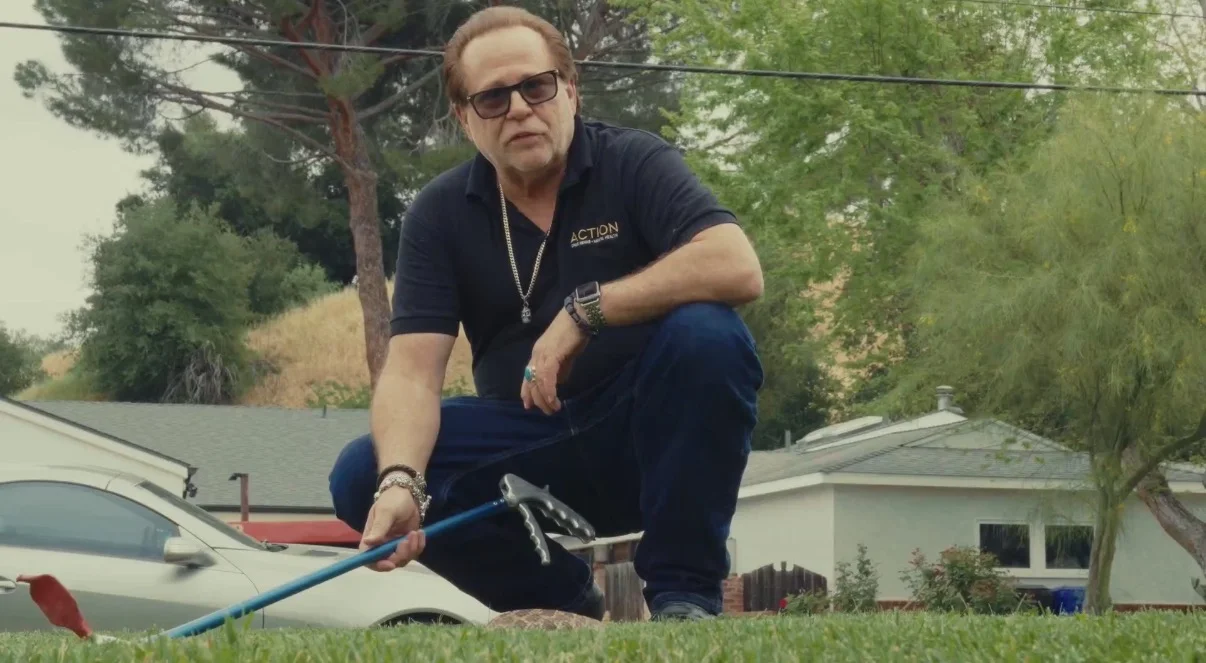
Cary is a well-known Santa Clarita Valley community leader, business owner, addiction expert, and the face of The Snake School's rattlesnake wrangling operation. With over 40 years of rattlesnake handling experience — a fascination that started when he was a little kid — and 40 years working with dogs, Cary brings decades of fluency with both species to every training day. A passionate advocate for wildlife safety and co-existence, he has made it his mission to educate families and pet owners about living safely alongside rattlesnakes in Southern California. When a rattlesnake shows up where it's not welcome, Cary is the one people call — and he handles every encounter with calm, respect for the animal, and a deep commitment to public safety.
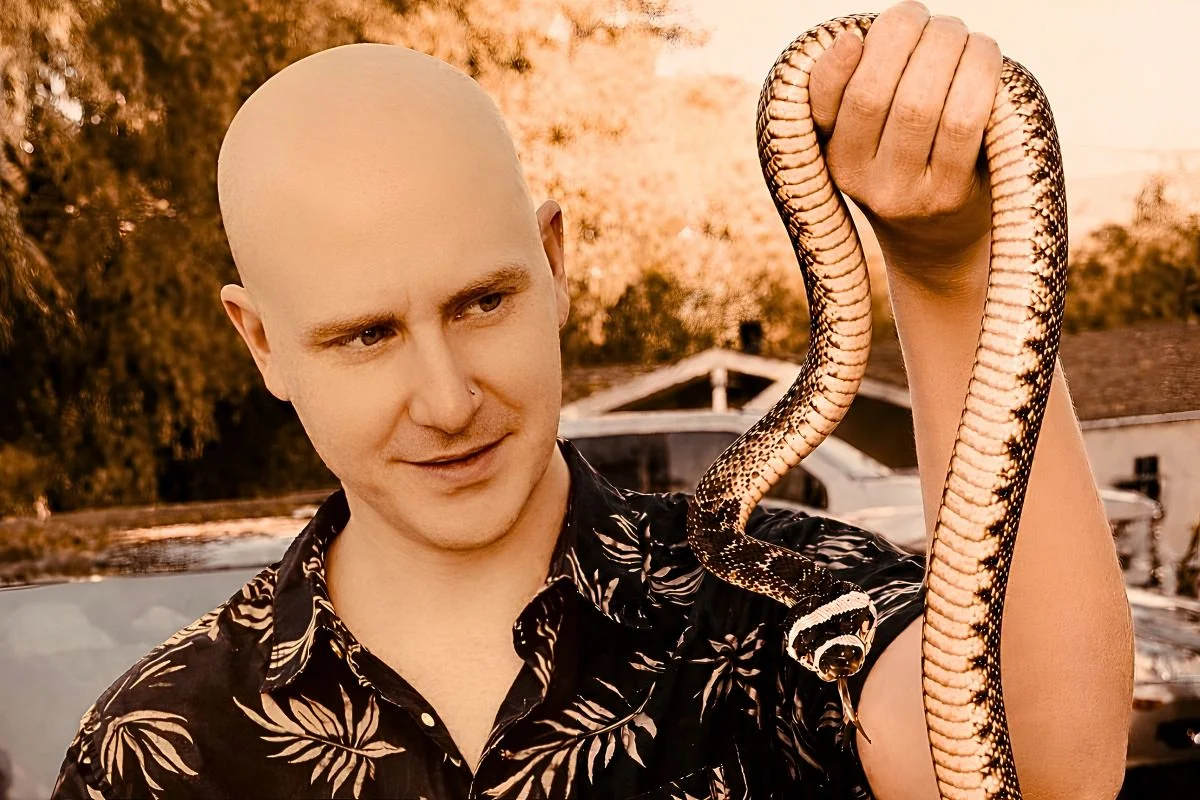
Scott started The Snake School for Dogs™ to build the rattlesnake avoidance program he wanted to put his own dog through — one where safety, training quality, and care for the animals are all uncompromising. He has 5 years of experience handling venomous snakes alongside his father Cary on the wrangling team, plus many years working with dogs — and he runs every training day to keep it smooth, safe, and high-standard for the dogs and the snakes. Before starting The Snake School, Scott learned hands-on as part of a 2-person team across hundreds of rattlesnake avoidance training sessions. Additionally, Scott holds a Bachelor of Science degree from California State University. After consulting with expert herpetologists on the matter of muzzled rattlesnakes, Scott will never handle another live muzzled rattlesnake again.
Rattlesnakes aren't a "maybe" in this valley — they're a near-certainty. The numbers below are why we built this course.
Rattlesnakes modeled across the Santa Clarita Valley — a wide estimate from measured field densities and undeveloped acreage, presented as our estimate, not a census.
Dogs bitten by rattlesnakes every year in the United States — one of the most common venomous wildlife encounters in North America.
Rattlesnakes removed from homes and yards around Santa Clarita by local relocation services — encounters here are routine, and spike in warm, dry years.
Sources: Crotalus oreganus field telemetry density data · CDFW · L.A. County Dept. of Regional Planning · WSU Veterinary Teaching Hospital (U.S. bite count)
Santa Clarita sits in the transition zone between the California coast and the Mojave Desert. Most Southern Pacific Rattlesnakes here carry the standard hemotoxic venom (destroys tissue and disrupts clotting) — but published research documents nearby populations with neurotoxic components (attack the nervous system, can cause respiratory failure), and in rarer cases a bite can carry both. Because neurotoxic venom often produces far less swelling, a serious bite can look deceptively mild.
If your dog is bitten, this is a medical emergency. Highly neurotoxic venom causes far less swelling than typical rattlesnake venom — your dog may appear fine but is in critical danger. Do not wait for symptoms to worsen. Rush your dog to an animal hospital immediately for anti-venom treatment.
Less swelling does not mean less dangerous. With neurotoxic venom, the opposite is true.
Classes fill fast. Reserve your spot today and give your dog the protection they need for every trail, backyard, and open space.
Reserve a Spot →